Baby jellyfish
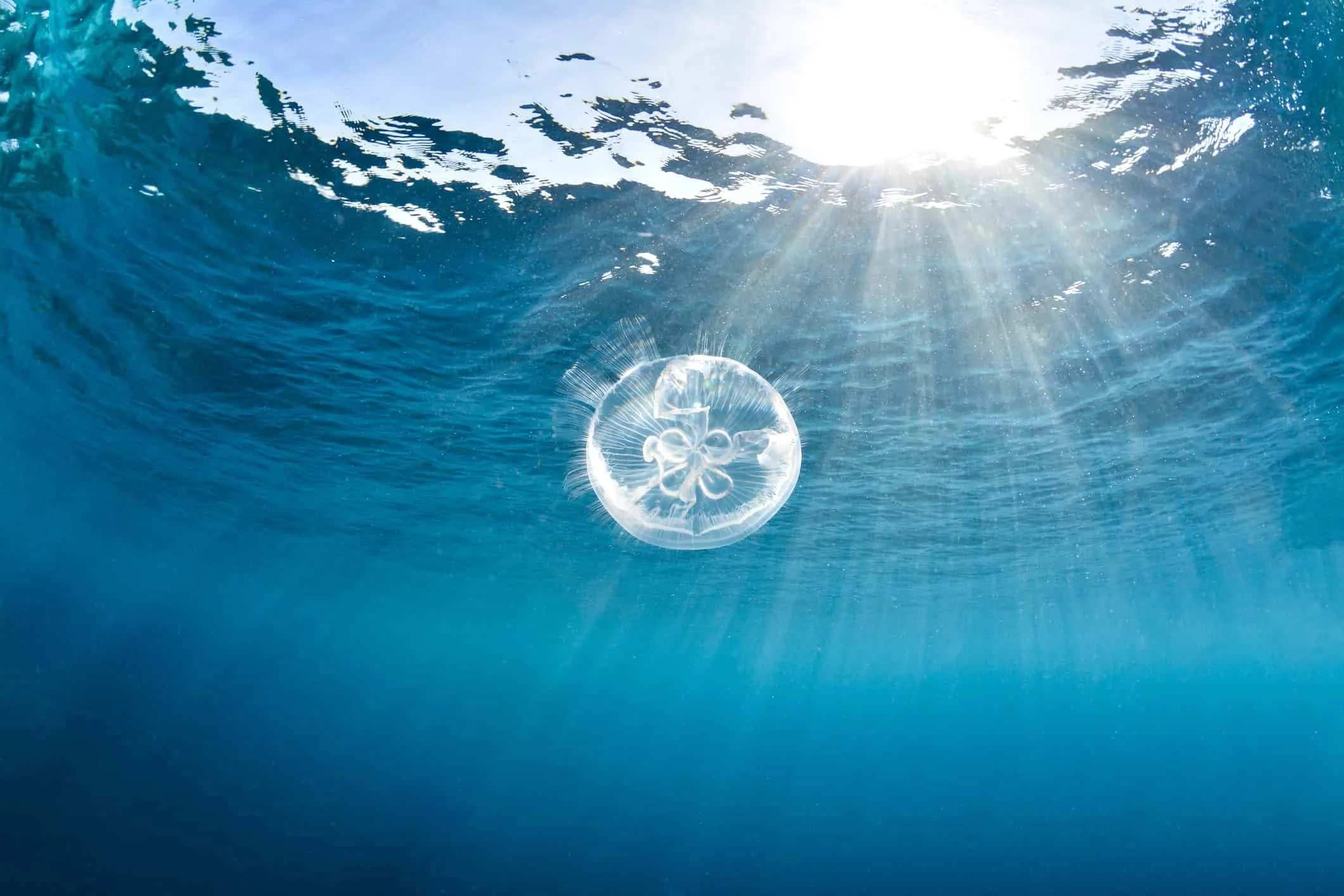
Two Christmases ago, we traveled to Cozumel, that beautiful tropical island off the Gulf side of Mexico. One morning, we went snorkeling, and it was glorious in the way snorkeling always is—floating just above another world, peering down at treasures beneath the surface: starfish, manta rays, squid, and a kaleidoscope of tropical fish moving through coral like living stained glass.
I was floating on the surface with my three daughters, face down in the water, when I noticed I kept slapping at my legs. There was a stinging sensation—not exactly painful, but not pleasant either. Like chigger bites on a hot summer day after walking through grass. Only we were in the ocean.
A moment later, my youngest daughter, a sophomore in high school, jerked upright.
“Something’s biting me!”
The rest of us laughed. Lucie has a flair for catastrophe and a tendency to assume every headache is terminal. But then my middle daughter, Clare, lifted her head too.
“No, seriously,” she said. “I feel it too.”
I began to wonder if maybe it wasn’t our imagination after all. At first, there was nothing to see. No fish brushing past us, no sea creature lurking nearby. Just endless blue water shimmering in the sun. But then, a little deeper below the surface, I spotted a jellyfish drifting silently through the water, translucent as glass.
I swam over to our guide, Miguel.
“Is there something in the water stinging us?” I asked.
He hesitated, then grinned sheepishly.
“Yes,” he said. “There are baby jellyfish in the water. They’re almost invisible. They’re not dangerous, but they can sting.”
Then he added something I haven’t forgotten since.
“We don’t usually tell the tourists,” he said with a laugh. “But if you dive deeper, you won’t feel them. The baby jellyfish can’t go deep.”
That thought stayed with me.
Because isn’t that so much like life?
How often do we spend our days bobbing along the surface of existence, getting stung by the tiny jellyfish of being human? The small irritations. The anxieties. The insecurities. The endless churn of thought. The disappointing text message. The unexpected bill. The fear about our health. The resentment we replay in the shower. The argument we rehearse in our heads while driving to work.
In yoga philosophy, these mental fluctuations are called vrittis—the restless waves and whirlpools of the mind that disturb the stillness of consciousness. Most of them are not life-threatening. But they sting. And over time, those small stings can begin to dominate our experience. They pull us out of the wonder of being alive. They keep us trapped at the surface, reactive and distracted, tossed around by every current.
So what do we do?
Maybe the answer is exactly what Miguel told us that day in the ocean:
Go deeper.
Meditation, mindfulness, prayer, silence—these are ways of diving beneath the turbulence of surface living. Beneath the constant mental chatter. Beneath the ego, the fear, the noise.
And something strange happens there.
The deeper we go, the quieter it becomes.
The thoughts are still above us somewhere, drifting near the surface. The jellyfish still exist. Life still contains disappointment, grief, uncertainty, inconvenience. But down deeper, they lose their power to sting us quite so much.
There is another layer beneath thought entirely—a cooler, calmer place where awareness itself lives.
Maybe that is what our yoga practice really is:
not escaping life, but descending beneath the agitation long enough to remember what we are underneath it.
Namaste, my friends.
“The quieter you become, the more you are able to hear.” — Rumi
“Within you there is a stillness and a sanctuary to which you can retreat at any time.” — Hermann Hesse

